
The Real History, Science, and Meaning Explained
Here’s your revised version with power words added naturally for stronger emotional impact and engagement:
The Real History, Science, and Meaning Explained
A sneeze happens in a split second. One moment, everything is calm and quiet. The next, someone erupts with a sudden, explosive achoo. Almost instantly, someone nearby responds with a warm, instinctive, “Bless you.”
It feels automatic. It feels deeply natural.
But have you ever truly stopped to wonder why we say “Bless you” at all?
This simple yet powerful phrase slips into conversation effortlessly, yet it carries centuries of rich tradition and fascinating history. Some passionately connect it to faith and divine protection. Others trace it back to ancient superstition, mysterious beliefs, and historical health fears during deadly plagues.
In America, saying “Bless you” has evolved into a deeply rooted social custom — a timeless gesture passed from parents to children like an unspoken rule of respect. Even in our modern, science-driven world, where sneezing has a clear medical explanation, this enduring habit remains surprisingly strong.
Whether spoken in a busy classroom, a professional office, or around a warm family dinner table, “Bless you” continues to echo as a small yet meaningful expression of kindness, courtesy, and genuine human connection.
Does Your Heart Stop When You Sneeze?
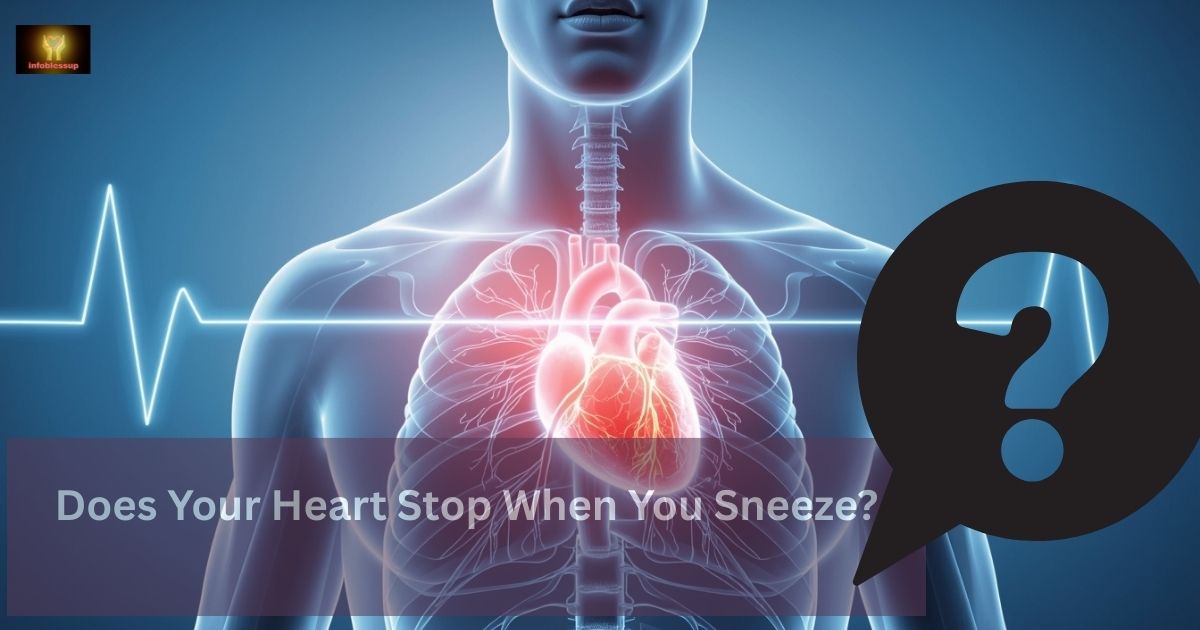
Many people ask, Can sneezing stop your heart? The short answer is no. Your heart does not stop. However, a sneeze causes a brief fluctuation in blood pressure. The vagus nerve becomes active. This may slightly change your heartbeat rhythm. Still, the cardiovascular response quickly stabilizes. It feels dramatic, but it is safe for most healthy people.

Sneezing begins with nasal cavity irritation. The trigeminal nerve sends a signal to the brain. Then the autonomic nervous system triggers a powerful respiratory reflex. Air bursts out at high speed. This is an involuntary bodily reflex. So, if someone claims their heart has stopped, reassure them gently. It doesn’t.
What Happens in Your Body During a Sneeze?
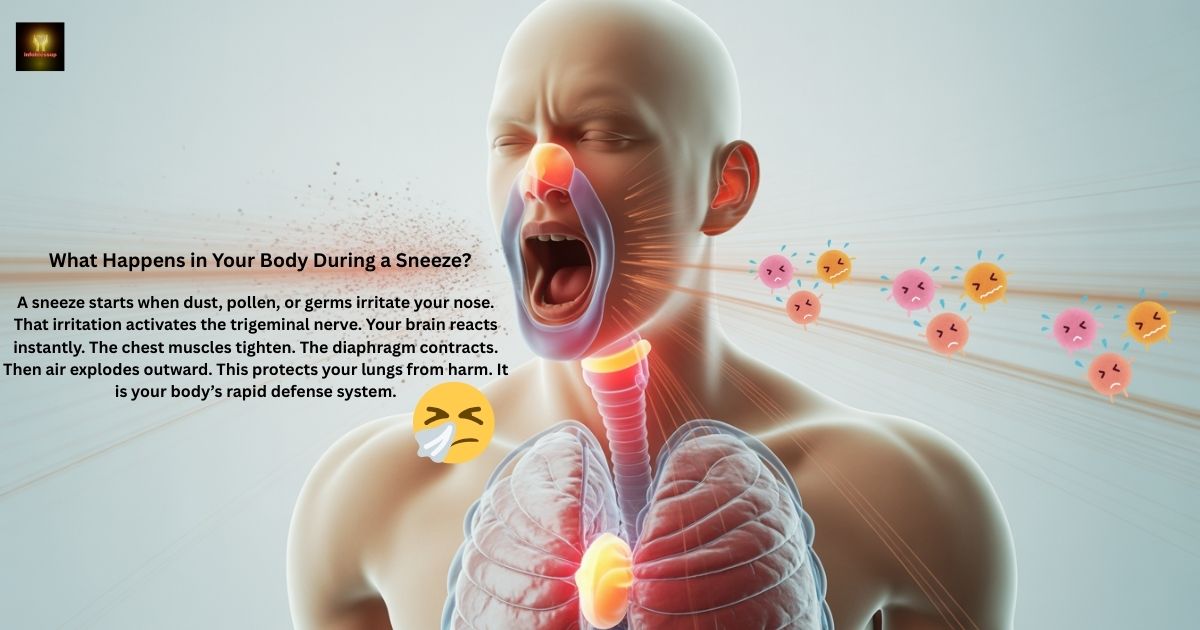
A sneeze starts when dust, pollen, or germs irritate your nose. That irritation activates the trigeminal nerve. Your brain reacts instantly. The chest muscles tighten. The diaphragm contracts. Then the air explodes outward. This protects your lungs from harm. It is your body’s rapid defense system.
Many wonder, What happens if you hold in a sneeze? Doctors warn against it. Blocking the force can increase internal pressure. Rare cases show ear injury or throat strain. The sneeze is strong by design. Let it out safely. Cover your mouth. Follow cough and sneeze etiquette rooted in modern hygiene practices and rising public health awareness.
What Is the Origin of the Saying “God Bless You”?
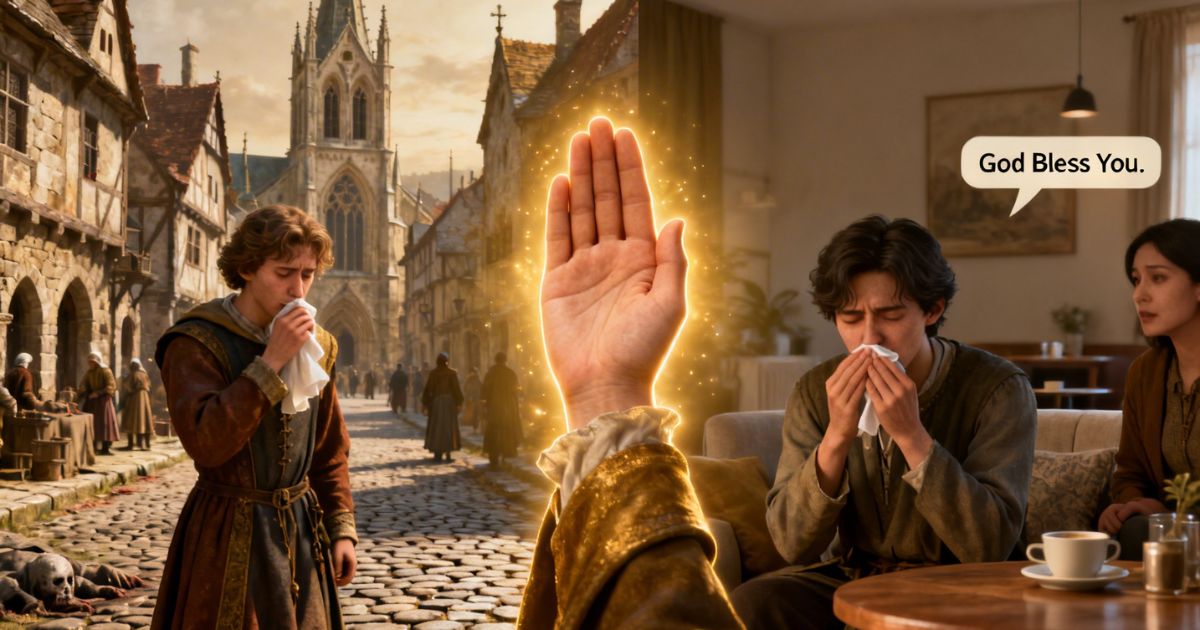

To understand the Origin of God, bless you, we travel back to medieval Europe. During times of sickness, sneezing often signaled danger. People believed a sneeze could release the soul. This soul-leaving-body myth shaped early reactions. Blessings were seen as protection.
The phrase grew stronger during the Black Death. In the 6th century pandemic, sneezing was feared. It was a plague symptom sneezing warning sign. Pope Gregory, I encouraged the religious blessing tradition after a sneeze. This Pope Gregory I blessing became part of Christian customs and later American speech.
Is Saying “Bless You” Based on Superstition or Science?
At its core, the phrase reflects superstition vs science. Ancient people feared evil spirits sneezing belief ideas. They followed folklore about sneezing and believed in a spiritual meaning of sneezing. Saying a blessing felt protective.


Today, science dismisses those fears. Yet the phrase survives because of cultural politeness norms and traditional social rituals. When someone asks, Why do people say God bless you? The answer blends history, fear, and courtesy. It began as protection. It remains as kindness.
How the Bubonic Plague Popularized “God Bless You”
The Bubonic plague sneezing connection changed everything. During the Black Death, sneezing often came before death. The Bubonic plague devastated families across the Roman Empire and beyond. Fear spread faster than medicine.
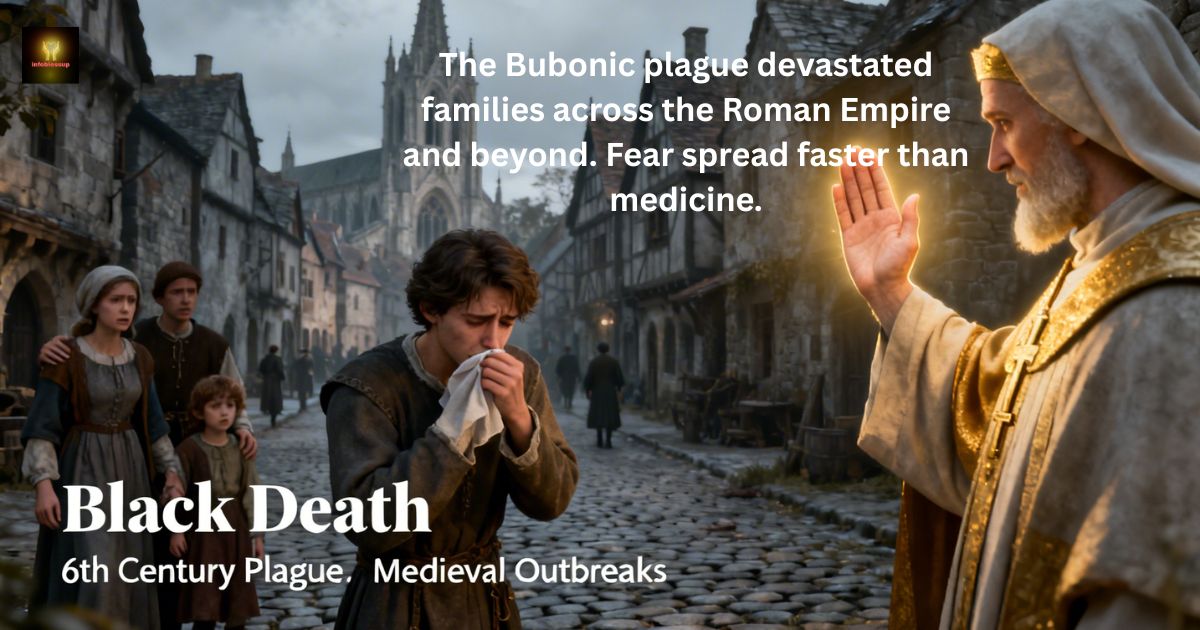
During this crisis, Pope Gregory I urged people to bless those who sneezed. This was not casual. It was an urgent prayer. The 6th century plague outbreak made blessings common speech. Over time, what began as a survival ritual became everyday manners.
| Historical Event | Why Sneezing Mattered | Cultural Impact |
| Black Death | Sneezing is seen as a fatal sign | Blessings became urgent |
| 6th century pandemic | Widespread fear | Prayer after sneeze normalized |
| Medieval outbreaks | Limited medicine | Sneezing seen as a fatal sign |
Sneeze Responses From Around the World
America says, “Bless you.” Germany says “Gesundheit,” meaning good health. The Gesundheit meaning focuses on wellness. Spain says “Salud,” which also means health. The Salud meaning reflects hope for strength.

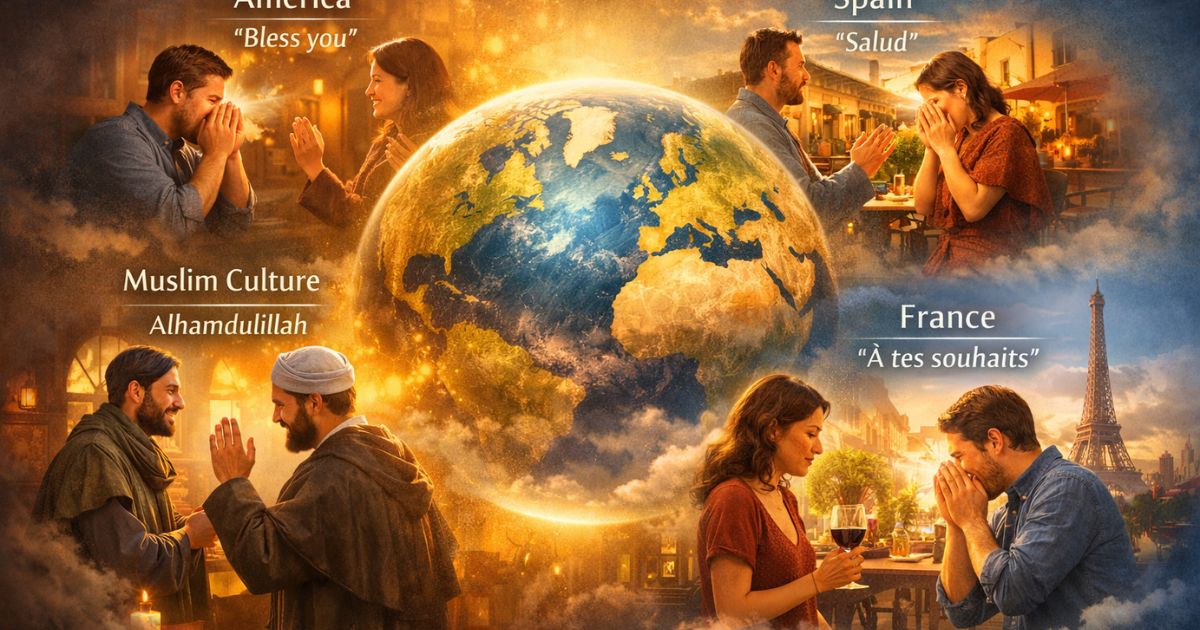
In Muslim cultures, people say “Alhamdulillah after sneezing. This Islamic sneeze response, thanks, God. In France, people say “À tes souhaits.” The phrase ” À tes souhaits ” means “ wishes your desires come true. These global sneeze traditions show rich international etiquette customs.
How Sneezing Etiquette Has Changed Over Time
In ancient days, sneezing invited prayer. Today, it invites tissue use. The shift shows clear evolution in social behavior. Modern classrooms teach elbow covering. Offices promote sanitizer stations. These habits reflect post-pandemic social norms.

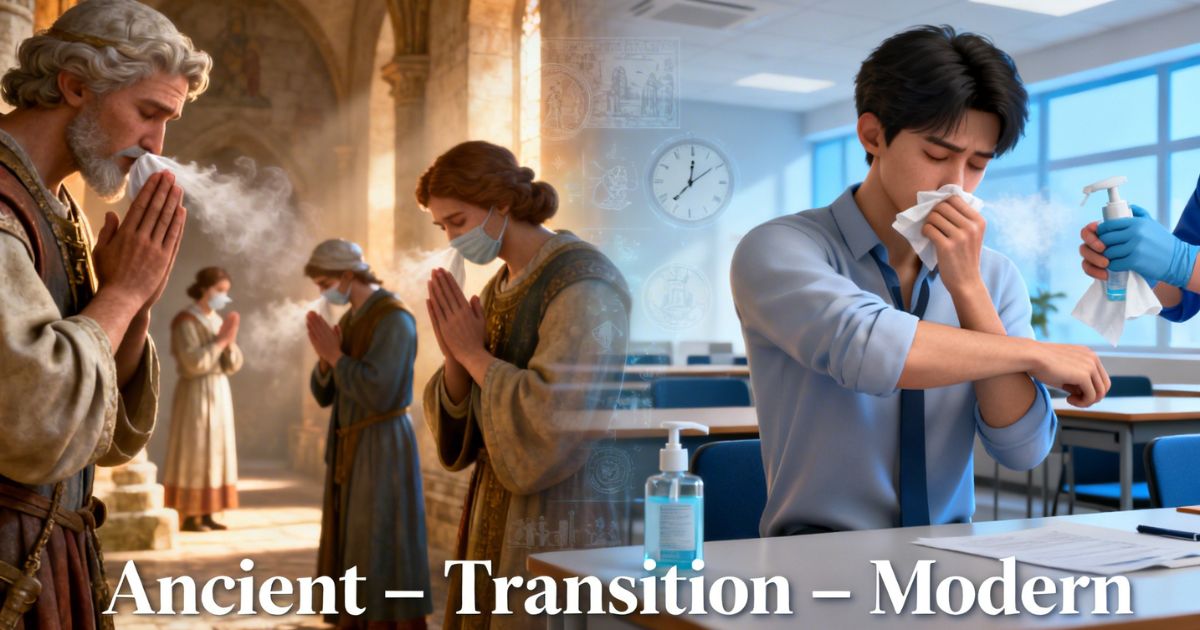
The change highlights stronger public health awareness. Instead of fearing spirits, we fear germs. Instead of blessings for survival, we follow hygiene rules. Yet the phrase remains. That persistence reveals the power of language tradition.
Do We Still Need to Say “Bless You” Today?
Many ask, Do we still say bless you today? In America, most people do. Silence often causes an awkward reaction. Saying the phrase satisfies a politeness reflex shaped by social conditioning.
However, generational behavior differences appear. Younger adults sometimes skip it. Some prefer neutral responses. Still, the habit persists because it supports social bonding behavior and triggers an empathy response.
Should Sneezing Etiquette Be Rewritten for Modern Times?
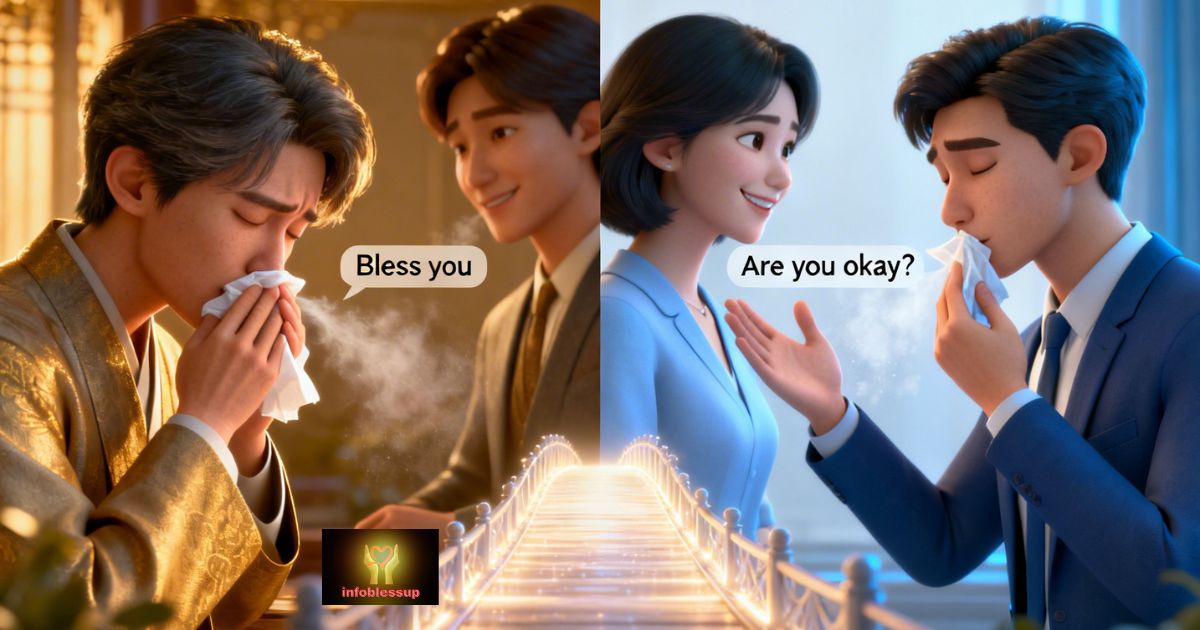
Society evolves. Manners shift. Some argue blessings feel outdated. Others see them as harmless kindness. The debate touches on respect for belief diversity.
Should Sneezing Etiquette Be Rewritten for Modern Times?
Manners evolve.
Some see blessings as outdated. Others view them as harmless kindness.
If someone asks, “Is it bad luck if no one says bless you?” — the answer is no.
The phrase holds cultural value, not magical power.
Etiquette may adapt.
Kindness never goes out of style.

The Psychology Behind Why We Respond to Sneezes
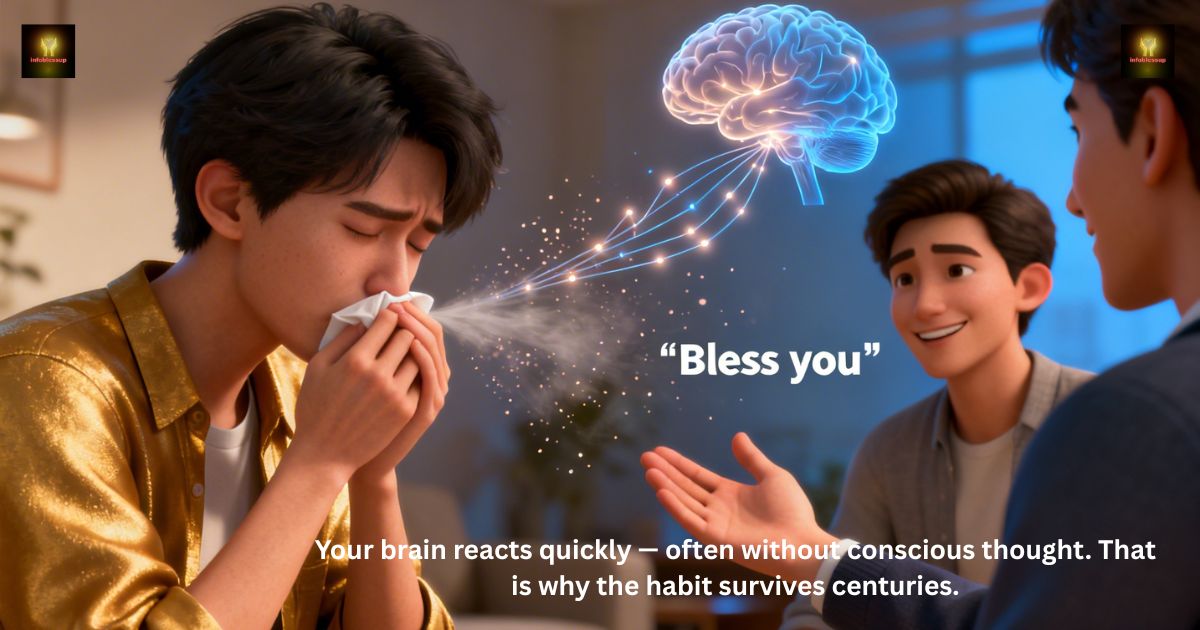
Sneezes interrupt the silence. Humans dislike sudden disruption.
Responding restores comfort.
Psychologists link this to:
- Social bonding behavior
- Automatic courtesy
- Empathy triggers
Your brain reacts quickly — often without conscious thought. That is why the habit survives centuries.
Why Do Americans Automatically Say “Bless You” Without Thinking?
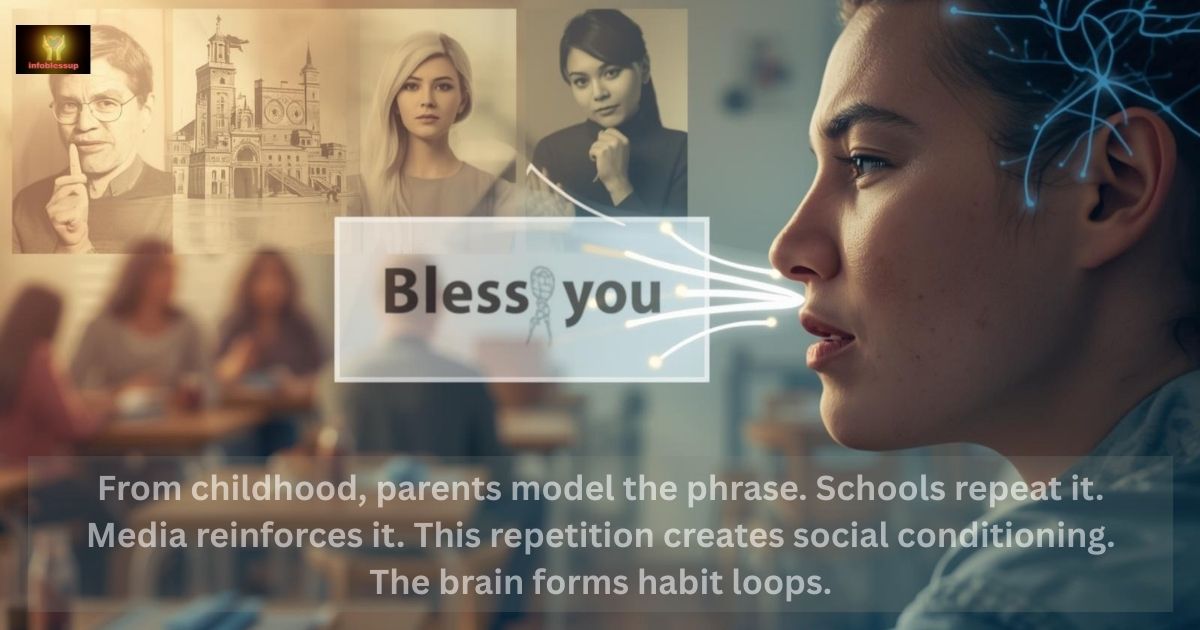
From childhood, parents model the phrase. Schools reinforce it. The media repeats it.
Repetition creates social conditioning. The brain forms habit loops.
Over time, saying “Bless you” becomes natural — part of American identity.
The roots run deep through:
- Fear
- Faith
- Science
- Shared humanity
Conclusion: Why Do We Say “Bless You” When Someone Sneezes?
So why do we say “Bless you” after a simple sneeze?
The answer stretches across ancient, hidden, and surprising layers of history, science, faith, and instinct.
What began during timeless plague outbreaks evolved into a polite social habit that feels almost essential today. Modern medicine has proven that sneezing is simply a respiratory reflex — not a spiritual threat.
Yet this little-known tradition survives because of deep social conditioning and cultural politeness. Its roots may be historical, but its presence remains remarkable in everyday life.
Today, saying “Bless you” is less about fear and more about care — a beautiful, extraordinary gesture of human connection.
It may seem like a small phrase, but it carries an unforgettable legacy and an ultimate reminder of shared kindness.
And that is why it continues to echo in homes, offices, and classrooms across America.
FAQs
What is the history behind saying bless you after a sneeze?
The phrase began during the Black Death when sneezing was feared as a deadly symptom, and blessings were offered for protection.
What is the scientific explanation of a sneeze?
A sneeze is a protective reflex triggered by nasal irritation, causing a sudden burst of air to clear the airways.
Why do people actually say “bless you”?
People say it out of tradition and politeness, rooted in old religious beliefs and social courtesy.
Who started saying “God bless you” after a sneeze?
Pope Gregory I is widely credited with encouraging the phrase during the 6th-century plague outbreak.
What’s the loudest sneeze ever recorded?
It reportedly reached around 176 decibels, though such claims are debated and not officially verified.
Meta Description
Discover why we say bless you after sneezing. Explore the history, science, psychology, and meaning behind this timeless social habit.

I am Fakhra Anwar. I am an SEO AI-powered and content writer with four years of experience. I help websites rank higher and grow traffic, and look amazing. My goal is to make SEO and web design simple and effective for everyone.
1 thought on “Why Do We Say “Bless You” When Someone Sneezes? The Real History, Science, and Meaning Explained in 2026”